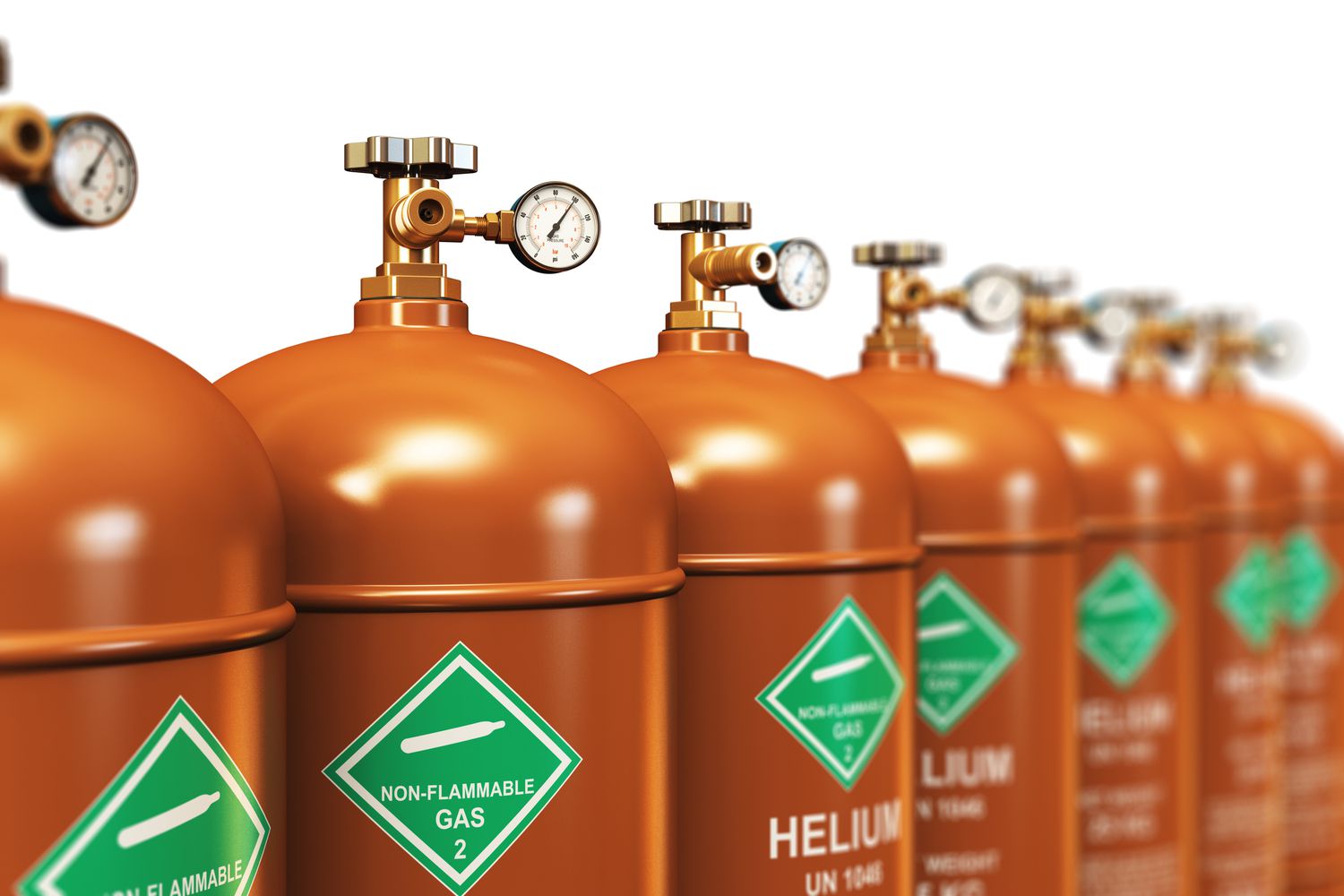
Helium is a unique industrial gas with properties that make it essential across healthcare, technology, manufacturing, research, aerospace, and other specialized industries. Unlike many commonly used industrial gases, helium cannot be produced economically through ordinary chemical processes. Most commercial helium is recovered from natural gas reservoirs, which makes supply closely connected to geological resources, production infrastructure, processing facilities, and global trade networks. As demand continues to evolve, understanding helium capacity is increasingly important for companies that depend on a reliable supply.
Helium capacity refers broadly to the amount of helium that producers and processing facilities can extract, purify, store, and make available to the market. It does not necessarily represent the amount of helium physically present underground. Several factors determine how much helium can actually reach consumers, and these factors can vary significantly between major producing and consuming markets.
Understanding Global Helium Capacity
Helium resources are concentrated in relatively few locations around the world. This geographic concentration means that changes at a major production facility can have effects far beyond its immediate region. Countries with significant natural gas resources containing commercially recoverable helium can play an important role in international supply.
The overall supply chain generally begins with natural gas production. Helium is separated from natural gas during processing, then purified to meet the requirements of different applications. Once processed, it may be transported as a compressed gas or cryogenic liquid depending on the intended use.
Because helium production depends on suitable natural gas reservoirs, increasing helium capacity is not as simple as building a conventional gas plant. Developers need access to helium-bearing resources, appropriate processing technology, transportation infrastructure, and sufficient investment.
Natural Resource Availability
One of the most important influences on helium capacity is the availability of suitable underground resources. Helium forms naturally through radioactive decay within the Earth’s crust and can accumulate underground over extremely long periods. Commercial deposits require sufficient concentrations and favorable geological conditions.
Not every helium-bearing natural gas field is economically viable. The concentration of helium, overall gas composition, depth, infrastructure requirements, and expected operating costs can all affect whether a resource is developed.
As a result, discoveries of helium-rich natural gas deposits can create opportunities for future capacity growth, but the transition from discovery to commercial production can take years.
Production Infrastructure and Processing Technology
Having a helium resource does not automatically guarantee additional market supply. Specialized processing equipment is required to separate helium from other gases and achieve the purity levels demanded by customers.
Processing plants may use several stages to remove unwanted components and concentrate helium. Further purification can produce high-purity helium for applications that have strict technical requirements.
Infrastructure limitations can restrict helium capacity even when underground resources are available. Processing plants require substantial capital investment, reliable energy supplies, trained personnel, and maintenance programs. Pipeline systems, storage facilities, and transportation networks are also important parts of the supply chain.
Technological improvements can help producers recover helium more efficiently. Better separation systems, improved purification methods, and process optimization can potentially increase recoverable output from existing resources.
Demand From Major Industries
Changes in demand also influence how the market develops. Helium has applications in magnetic resonance imaging, semiconductor manufacturing, fiber optics, welding, laboratory research, leak detection, aerospace systems, and cryogenic technologies.
Medical imaging is particularly important because superconducting MRI systems rely on extremely low temperatures, traditionally achieved using liquid helium. Although newer MRI technologies can reduce helium consumption, existing systems continue to require dependable supplies.
The semiconductor industry also uses high-purity helium in specialized manufacturing processes. As electronics manufacturing expands, demand for reliable industrial gases can influence purchasing patterns and regional supply requirements.
Aerospace and research organizations require helium for applications involving cryogenics, pressurization, testing, and specialized scientific equipment. Therefore, changes in any of these sectors can affect overall market demand.
The Role of Major Producing Markets
Major producing markets have an outsized influence on global availability because helium production is geographically concentrated. A change in output from a large facility can affect international customers, particularly when alternative suppliers have limited spare capacity.
Production levels may change because of maintenance, facility upgrades, natural gas production decisions, technical issues, or changes in operating economics. Planned shutdowns can often be managed through inventories and alternative sourcing, while unexpected interruptions can create more immediate supply challenges.
New production projects can eventually strengthen global helium capacity. However, project development typically involves exploration, resource evaluation, financing, construction, commissioning, and regulatory approvals. This long development cycle makes the market less responsive to sudden increases in demand.
Transportation, Storage, and Distribution
Helium availability is also influenced by logistics. Since major helium resources and major consumers are often located in different regions, international transportation is essential.
Liquid helium requires extremely low temperatures to remain in liquid form. Specialized containers and transportation systems are therefore necessary. Handling losses, transportation distances, port infrastructure, and storage capabilities can all affect delivered supply.
Storage provides another important buffer. Producers, distributors, and large industrial consumers may maintain inventories to manage fluctuations between production and consumption. However, inventory levels vary by company and region, meaning market availability can change even when underlying production remains relatively stable.
Geopolitical and Regulatory Factors
International helium markets can be affected by government policies, trade regulations, export requirements, environmental rules, and geopolitical developments. Restrictions affecting energy infrastructure or international trade can influence the movement of helium between producing and consuming countries.
Regulatory requirements can also influence new project development. Developers may need environmental approvals, land access, infrastructure permits, and other authorizations before production can begin.
These factors can add time and cost to new capacity projects. At the same time, transparent regulations and infrastructure investment can support long-term development.
Recycling and Conservation
Helium conservation has become increasingly important as companies look for ways to reduce operating costs and protect supply. In applications where helium can be captured after use, recovery and recycling systems may reduce the amount of newly supplied helium required.
Research laboratories, semiconductor facilities, and other high-consumption operations can potentially benefit from recovery systems. Improvements in equipment design can also reduce losses during filling, transfer, and operation.
These efforts do not directly create new geological resources, but they can effectively stretch available supply by reducing unnecessary consumption. As a result, efficiency improvements can influence the balance between helium capacity and market demand.
Future Trends in Helium Capacity
Future helium capacity will depend on a combination of new resource development, existing-field performance, technology, investment, demand growth, and international logistics. New projects can diversify supply sources and reduce dependence on a small number of major producers.
At the same time, mature production facilities may face declining output or require significant investment to maintain their operating levels. This creates an ongoing need for exploration and infrastructure development.
Demand patterns will remain another important variable. Growth in healthcare technology, electronics, scientific research, aerospace, and advanced manufacturing could increase requirements for high-purity helium. Conversely, conservation technologies and helium recovery systems could moderate consumption growth.
Why Helium Capacity Matters to Businesses
For businesses that rely on helium, capacity trends can affect procurement planning, operational continuity, and long-term costs. Companies with critical helium requirements may benefit from monitoring production developments, supplier diversification, inventory strategies, and recycling opportunities.
Understanding the difference between underground resources, production capacity, and actual market availability is particularly important. A country may possess significant helium resources without immediately being able to supply large volumes to international customers.
Businesses can therefore evaluate helium availability through several indicators, including new project announcements, processing capacity, production disruptions, transportation infrastructure, demand growth, and inventory conditions.
Conclusion
Helium capacity is shaped by a complex combination of natural resources, production infrastructure, processing technology, industrial demand, transportation, regulation, and global trade. Because commercially useful helium resources are concentrated in a limited number of regions, changes in major producing markets can have international consequences.
Future availability will depend not only on discovering new helium resources but also on developing processing facilities, expanding logistics networks, improving recovery technologies, and using existing supplies efficiently. For industries that depend on helium, monitoring these capacity trends can provide valuable insight into potential supply conditions and help support more effective long-term planning.
