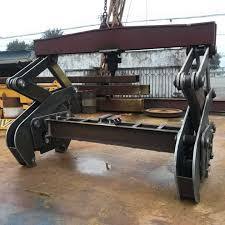
Steel manufacturing and processing industries rely heavily on efficient, safe, and precise material handling systems. Among the most important tools used in steel plants and rolling mills are lifting and gripping devices designed to move hot and heavy billets. In this context, Automatic Billet Tongs have become a game-changing innovation. They are specifically engineered to improve safety, increase productivity, and reduce manual effort in handling steel billets during production and transportation processes.
As steel production continues to grow globally, the need for automation in handling equipment has become more critical than ever. Traditional manual or semi-automatic tools are no longer sufficient for high-volume operations. This is where Automatic Billet Tongs stand out as a reliable solution that transforms how steel is managed in industrial environments.
Understanding Automatic Billet Tongs in Steel Industry
What Are Automatic Billet Tongs?
Automatic Billet Tongs are specialized mechanical devices designed to lift, grip, and transport steel billets without requiring manual adjustment during operation. Unlike conventional tongs, which often require workers to position and secure the grip manually, automatic versions operate through self-adjusting mechanisms that respond to the billet’s shape, weight, and movement.
These tongs are typically used in steel mills, forging plants, and rolling facilities where hot billets must be transferred quickly and safely between processes. The automatic locking system ensures a firm grip once the tongs are placed on the billet, reducing the risk of slippage or accidents.
How They Function
The working principle of Automatic Billet Tongs is based on self-energizing gripping mechanisms. When the crane lifts the tongs along with the billet, the weight of the load increases the gripping force. This ensures a stronger hold as the load becomes heavier. When the load is released, the mechanism automatically disengages, allowing for smooth unloading without manual intervention.
This intelligent design not only simplifies operations but also ensures consistency in handling various billet sizes and weights.
Advantages of Using Automatic Billet Tongs
Improved Workplace Safety
One of the most significant benefits of Automatic Billet Tongs is the enhancement of workplace safety. Steel billets are often extremely hot and heavy, making manual handling highly dangerous. Workers face risks such as burns, crushing injuries, and accidents caused by slipping loads.
With automated gripping systems, direct human contact with the billets is minimized. This reduces the likelihood of injuries and creates a safer working environment in high-temperature industrial settings.
Increased Operational Efficiency
Efficiency is a critical factor in steel production, where delays can significantly impact output and profitability. Automatic Billet Tongs help streamline the movement of materials by eliminating the need for manual adjustments or repeated positioning.
Because the tongs automatically adapt to the billet and secure it quickly, loading and unloading times are reduced. This leads to faster production cycles and improved workflow across the entire facility.
Reduced Labor Dependency
Another important advantage is the reduction in manual labor requirements. Traditional billet handling systems often require multiple workers to position, adjust, and secure lifting tools. In contrast, Automatic Billet Tongs allow a single crane operator to manage the entire process efficiently.
This reduction in labor dependency not only lowers operational costs but also allows skilled workers to focus on more critical tasks within the production process.
Enhanced Durability and Reliability
Steel plants operate in harsh environments involving high temperatures, dust, and heavy mechanical stress. Equipment used in such conditions must be highly durable. Automatic Billet Tongs are built using high-strength alloys and heat-resistant materials that ensure long service life even under extreme conditions.
Their robust design minimizes wear and tear, reducing maintenance frequency and downtime. This reliability is essential for continuous production environments where interruptions can be costly.
Applications of Automatic Billet Tongs in Industry
Steel Rolling Mills
In rolling mills, billets are continuously heated and shaped into finished steel products. Automatic Billet Tongs play a crucial role in transferring these hot billets from reheating furnaces to rolling machines. Their quick operation ensures that the billets maintain optimal temperature, which is essential for quality rolling.
Forging Industries
Forging processes require precise handling of heated steel materials. The controlled grip of Automatic Billet Tongs allows operators to position billets accurately into forging presses. This precision improves product quality and reduces material wastage.
Storage and Transportation
Beyond production, these tongs are also used for storage and internal transportation within steel plants. They help in organizing billets in storage yards and moving them between different sections of the facility efficiently.
Technological Advancements in Billet Handling Systems
Automation and Smart Controls
Modern versions of Automatic Billet Tongs are increasingly integrated with smart control systems. These systems allow operators to monitor load conditions, gripping force, and operational status in real time. Such advancements improve precision and reduce the risk of operational errors.
Integration with Crane Systems
Many Automatic Billet Tongs are now designed to integrate seamlessly with overhead crane systems. This integration allows synchronized movement and automated lifting cycles, further enhancing productivity in large-scale steel plants.
Improved Load Balancing Mechanisms
Advanced engineering has also led to better load distribution within the tongs. This ensures that billets are held securely without uneven pressure, reducing the risk of deformation or dropping during transport.
Economic Impact of Automatic Billet Tongs
Cost Efficiency
Although the initial investment in Automatic Billet Tongs may be higher compared to traditional tools, the long-term cost savings are substantial. Reduced labor costs, lower maintenance needs, and improved production efficiency contribute to overall economic benefits.
Increased Production Output
Faster handling times and reduced downtime directly translate into higher production output. Steel plants using automated handling systems can process more billets in less time, increasing overall profitability.
Reduced Material Losses
Accidents during manual handling often result in damaged billets or production delays. With the precision and stability offered by Automatic Billet Tongs, material losses are significantly reduced, improving resource utilization.
Future of Steel Handling with Automation
The steel industry is moving toward complete automation, and material handling systems are at the forefront of this transformation. The role of Automatic Billet Tongs will continue to evolve with advancements in robotics, artificial intelligence, and sensor-based monitoring systems.
Future designs are expected to include self-diagnostic features, predictive maintenance capabilities, and even greater integration with automated production lines. These innovations will further enhance safety, efficiency, and cost-effectiveness in steel manufacturing.
Conclusion
In modern steel production, efficiency and safety are non-negotiable priorities. Automatic Billet Tongs have emerged as a vital tool in achieving both. By replacing manual handling methods with automated, self-adjusting mechanisms, they significantly improve operational speed, reduce risks, and enhance productivity.
From rolling mills to forging plants, their applications are widespread and continue to expand as technology advances. As the steel industry continues to modernize, Automatic Billet Tongs will remain an essential component in creating safer, faster, and more efficient material handling systems.
